AI Upskilling: LLMOps, RAG, and LLM Agents — A Practical Program
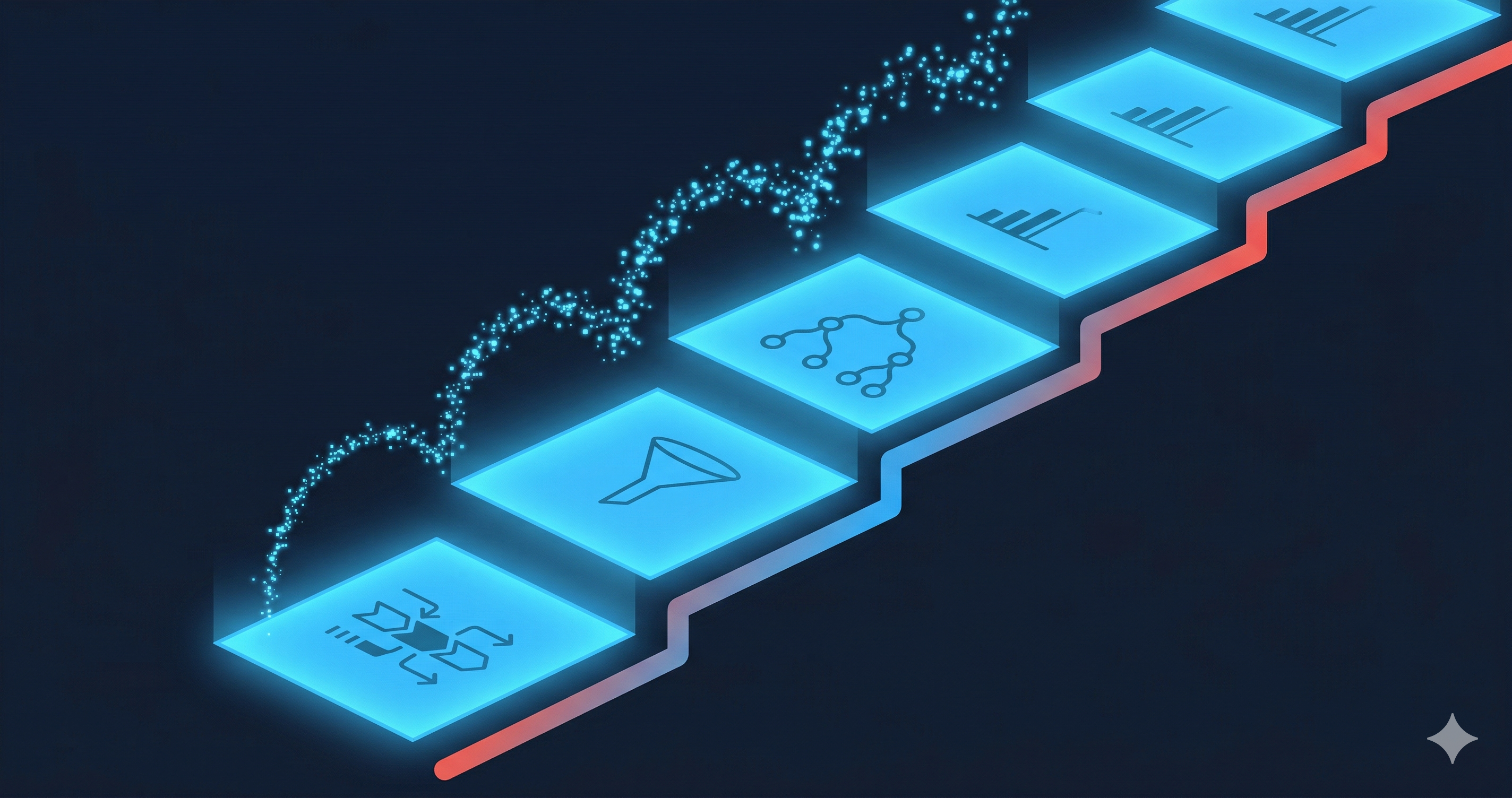
A practical, stackable AI upskilling program covering LLMOps, RAG pipelines, and LLM agent development for enterprise teams.

AI Up Skilling
Most “AI training” fails because it throws everyone into the same room and hopes for magic. Real organizations have different roles , different baselines , and different outcomes.
Below is a stackable AI upskilling program you can run as separate batches mapped to outcomes and job roles without wasting time on irrelevant content.
The Core Idea: Train by Role + Outcome
You likely have five groups in your org:
-
AI Users – they will prompt and use tools
-
Managers – they need strategy, ROI, governance
-
Workflow Automators – mid-skill technical people automating processes
-
AI Developers / Builders – engineers building RAG, agents, apps
-
AI Operators – platform/LLMOps/security teams running AI safely at scale
Each group needs a different training path.
Level 0 - AI Literacy (For Everyone)
This is mandatory. It ensures a shared baseline so people don’t misuse tools or ship unsafe AI.
| Bucket | Who should attend | Prerequisite skills | What it covers |
|---|---|---|---|
| AI Literacy / AI User | All employees, support, sales, ops, analysts, product | None | LLM basics, prompting, verification, data safety, safe usage, how to use internal AI tools |
Outcome: Everyone can use AI tools responsibly and consistently.
Track A - Managers / Leaders
Managers shouldn’t be forced into coding-heavy training. They need decision frameworks.
| Bucket | Who should attend | Prerequisite skills | What it covers |
|---|---|---|---|
| AI for Managers (Strategy/ROI/Governance) | Managers, Directors, Product Owners, Program Leads | KPIs, budgeting, delivery planning, risk/compliance awareness | Use-case selection, ROI/cost framing, platform choices, governance, risk, success metrics |
Outcome: Leaders can prioritize, govern, and fund AI initiatives properly.
Track B - Workflow Automation (Mid-Skill Technical / Power Users)
This is where a lot of business value lives: automating repetitive workflows using prompts, tools, and light scripting.
| Bucket | Who should attend | Prerequisite skills | What it covers |
|---|---|---|---|
| Prompt-to-Workflow Automation | Ops leads, analysts, solutions/presales, tech support leads | Process thinking, SaaS tool comfort, basic data handling | Prompt patterns, workflow design, structured outputs, human-in-loop, quality checks |
| Tool Use / No-Low Code Automation | Ops/analysts/power users | Familiarity with automation tools or concepts | Trigger/action flows, connectors, tool calling, approvals, safe automation |
| Basic API Automation | Tech analysts, ops engineers, solutions engineers | REST basics, Postman, light scripting | API calls, auth basics, chaining steps, error handling, logging runs |
Outcome: Mid-skill teams can build useful internal automations without needing a full engineering squad.
Track C - Engineers / Builders (Hard-Code Devs)
This is for teams shipping real AI products: RAG systems, agents, and AI features.
| Bucket | Who should attend | Prerequisite skills | What it covers |
|---|---|---|---|
| LLM App Development (Bedrock/Azure/OpenAI APIs) | Backend, full-stack, integration engineers | Strong coding, REST, auth (OAuth/IAM), cloud basics | LLM API integration, tool/function calling, structured outputs, retries/rate limits, cost controls |
| RAG Builders (Enterprise Search + Chat) | Backend + data engineers, search engineers | Python/TS, SQL, ETL basics | Chunking, embeddings, vector DB, retrieval tuning, reranking, grounding, RAG evaluation |
| AI Agent Developers (Tool-Use + Actions) | Senior backend/workflow engineers | Async/state mgmt, API integrations | Agent patterns, tool execution, orchestration, memory, reliability/error recovery |
| Model Tuning / Training (Specialist) | ML engineers, data scientists | NN/transformers, PyTorch, experiment workflow | LoRA/QLoRA, dataset prep, training runs, benchmarking, inference constraints |
Outcome: Engineering teams can build and ship production-grade AI applications—not demos.
Track D - AI Operators (Platform / LLMOps / Governance)
This is where enterprise AI succeeds or dies. Builders can’t operate safely at scale without these capabilities.
| Bucket | Who should attend | Prerequisite skills | What it covers |
|---|---|---|---|
| AI Platform Engineering (Unified Platform) | Platform Eng, DevOps/SRE, infra | K8s/Docker, CI/CD, IAM, observability | Multi-tenant platform patterns, routing, prompt/version mgmt, CI/CD automation, secrets, monitoring |
| LLMOps (Quality/Evals/Monitoring) | QA, ML engineers, platform | Python, testing discipline, metrics | Eval harness, regression tests, golden sets, red teaming basics, latency/cost SLOs, drift monitoring |
| Security / Compliance / Guardrails | Security, risk/compliance, platform leads | IAM, data governance, threat modeling basics | Guardrails, audit logging, PII controls, access policies, secure prompt/tooling patterns |
| Cost / FinOps for AI | FinOps, platform leads, eng managers | Cloud cost basics, usage metrics | Token economics, caching, quotas, routing for cost, showback/chargeback |
Outcome: Reliable, governed, cost-controlled AI deployment across teams.
Track E - Open Source Enterprise AI Platform
| Bucket | Who should attend | Prerequisite skills | What it covers |
|---|---|---|---|
| OSS Enterprise AI Platform (Auth + Automation + Deployment) | Platform Eng, DevOps/SRE, senior builders, security | K8s/Docker, CI/CD, OIDC/IAM, logging/monitoring | OSS reference architecture, OIDC/RBAC, automation, CI/CD, observability, guardrails + audit logs, enterprise deployment patterns |
| vLLM Inference Ops | Platform Eng, GPU ops, SRE | Linux + GPUs, containers, k8s | vLLM deploy/scale, batching, performance tuning, rollout, cost controls |
| LangChain/LangGraph-style Orchestration (OSS) | Senior builders + platform | Python/TS, API integration | Agent/workflow orchestration, tool calling, reliability patterns, internal app integration |
| Vector + Retrieval (OSS) | Builders + data engineers | SQL + Python, ETL | Weaviate/pgvector, embeddings pipeline, retrieval tuning, eval basics |
| OSS Security/Governance Best Practices | Security + platform leads | IAM, threat modeling, governance | Policy enforcement, audit logging, secrets, data boundaries, approved patterns |
Outcome: A practical enterprise OSS blueprint that teams can run internally—not a laptop demo.
Capstone Projects
Capstones are what convert training into real capability.
| Capstone | Who should attend | Recommended tracks | What it covers |
|---|---|---|---|
| Customer Support Agent (Actionable Agent) | Builders + operators | C1 + C3 + D3 + D1 | Tool-use agent, guardrails, eval harness, deployment readiness |
| Internal Knowledge RAG (Enterprise Search) | Builders + data engineers | C2 + D1 | Ingestion → embeddings → retrieval → grounding → evaluation → rollout |
| Workflow Automation Demo | Mid-skill tech users | B (all) | Prompt-to-workflow automation, approvals, run logging, quality checks |
| OSS Enterprise Platform MVP (Client Focus) | Platform + security + senior builders | E core + D optional | Auth + governance + CI/CD + audit logging + vLLM + orchestration + vector retrieval blueprint |